Homemade Presentation Timer: Raspberry Pi and Automation HAT
It’s February 2023 and SUmmit, The SU’s main mechanism for student input, is halfway through its second year of existence. Its objective is to provide a forum for students to raise issues and push their union to form standpoints (policies). The format had been dreamt up by experienced SU colleagues, combining best practice from across the sector to bring something new to students at Bath.
The format was a great success. Engagement among student leaders rose, access to student officers was better than ever, but in each session we would run out of time.
Students enjoyed being involved so much – sharing lived experiences, elaborating on their discussion points and generally convincing other summit members to share their views, that we would only get through half of our agenda the end of each session.
The Problem
Breakdown of Issues:
- We want as many people to talk as possible
- Sessions always run over time and it’s difficult to tell someone to stop talking
- Speaker timers are expensive – and not in the budget!
The Solution:
A few weeks before, I’d presented to a session of the city council, raising the impact of inflation on student residents. They had a clever presentation timer which counted down from 3 minutes and changed from green, to amber, to red to indicate the time I had left to speak. I thought to myself that I could make something like that…
The objective became to create a mechanism to keep a speaker informed that they have been speaking for a set time, without having to ask them to stop.
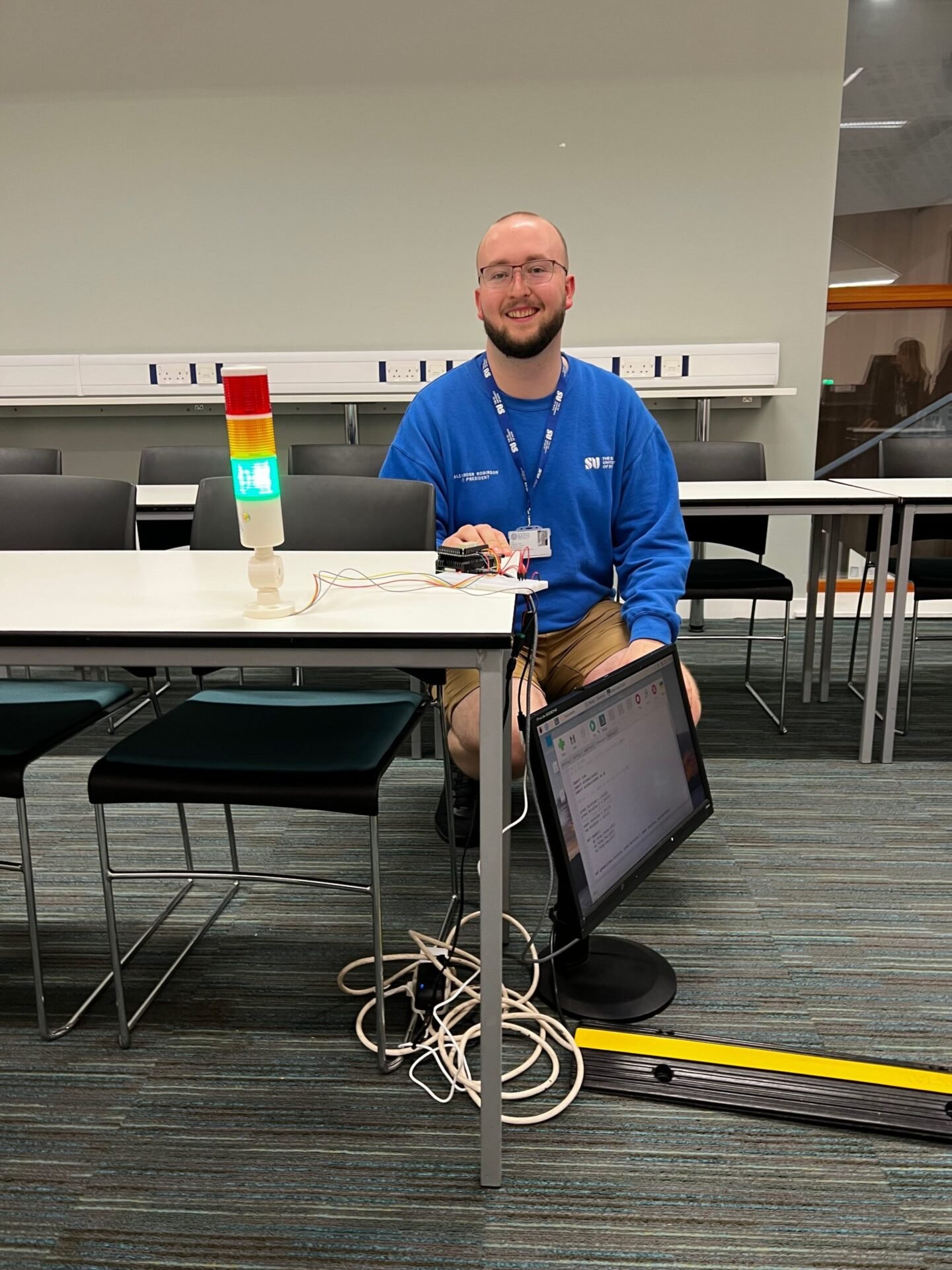
From my time with student radio, I knew that a set of switches could be used to control a simple LED. Our ‘Mic Live’ lamp in the studios is connected to a logic system ‘pathfinder’ which acts as a virtual GPIO connector between the studio PCs – it then turns on or off a 24v line output when the studio mics are live or brought down to 0. I’d use this logic with an old Raspberry Pi to create a make-shift timer and found an led tower traditionally used in manufacturing processes for the display.
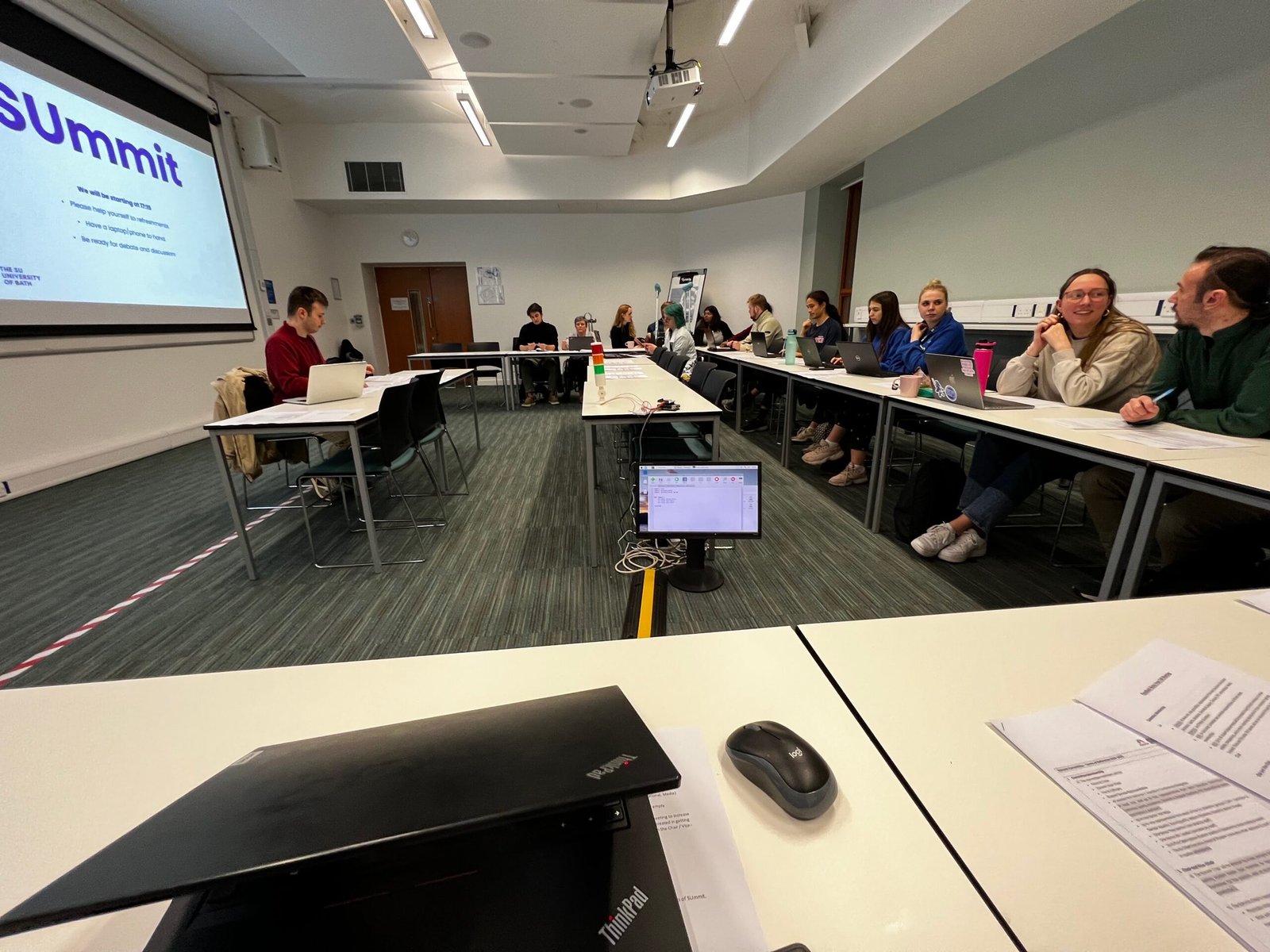
After forming a plan I wrote some simple scripts, connected up the lamps to a control circuit with a hat for the raspberry pi and packaged it all up to look like a combined product. Testing it in the summit session led showed how powerful a traffic light can be in influencing someone’s actions – in our first session we kept strictly to time, meeting our entire agenda.